UFC: History, Founder, How It Started, Unknown Facts and Rise to Fame
UFC: History, Founder, How It Started, Unknown Facts and Rise to Fame
When people search for UFC, they often think of spectacular knockouts, championship fights and some of the world’s most famous MMA fighters. But the story behind UFC is much bigger than what happens inside the Octagon. The organisation began in 1993 as an experiment to determine which martial art would work best in a real fight. More than three decades later, it has become one of the biggest brands in combat sports.

What Is UFC?
UFC stands for Ultimate Fighting Championship. It is a professional mixed martial arts organisation that brings together fighters trained in disciplines including Brazilian jiu-jitsu, wrestling, boxing, kickboxing and other combat sports.
Unlike a single-style martial arts competition, UFC allows fighters with different skill sets to compete under a common set of rules. Over time, those rules evolved significantly as the sport became more regulated and focused on athlete safety.
How Did UFC Start?
The origins of UFC go back to advertising executive Art Davie, who developed the idea of a tournament featuring fighters from different martial arts backgrounds. His concept eventually connected him with Brazilian jiu-jitsu teacher Rorion Gracie.
Davie and Gracie worked with Semaphore Entertainment Group (SEG) to turn the idea into an event. The first tournament took place on November 12, 1993, at McNichols Sports Arena in Denver, Colorado.
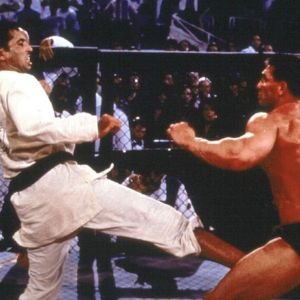
The original event featured an eight-man tournament designed to answer a simple but fascinating question: which fighting style would prove most effective against other styles? Royce Gracie eventually won the tournament, helping put Brazilian jiu-jitsu on the international combat-sports map.
 Who Built UFC?
It would be inaccurate to credit just one person for building UFC.
Art Davie was instrumental in developing the original concept, while Rorion Gracie brought Brazilian jiu-jitsu expertise and helped create the competitive concept. SEG, including executives such as Campbell McLaren and Bob Meyrowitz, helped produce and televise the first events.
A major transformation came in 2001, when Frank Fertitta III, Lorenzo Fertitta and Dana White became associated with new ownership under Zuffa. They focused on turning UFC into a regulated and professionally organised sport.
The Hardships Behind UFC’s Success
The early years of UFC were far from easy. The sport faced criticism from politicians, regulators and sections of the public. Its early events were also much less regulated than today’s MMA.
The organisation eventually introduced weight classes, rounds, judging criteria and additional fouls as it worked with athletic commissions. These changes were important in transforming MMA from its controversial early image into a regulated professional sport.
Even after the 2001 ownership change, the financial situation remained difficult. ESPN reported that the Fertittas had invested more than $40 million by 2004, while the business was still struggling to generate sufficient growth.
Then came The Ultimate Fighter. The reality television series gave viewers a closer look at aspiring fighters and created a pathway to a UFC contract. Its success became an important turning point for the organisation.
Why Is UFC So Famous?
The popularity of UFC comes from several factors. Fans can watch different martial arts styles compete under one ruleset, while individual fighters develop their own personalities and fighting identities.
The organisation also built a strong connection between live events, television, digital content and social media. According to UFC’s official history, its programming reaches more than 165 countries and territories.
The Octagon, championship belts, weight divisions and distinctive fighter walkouts have also become recognisable parts of modern MMA culture.
Unknown Facts About UFC
Here are some interesting UFC facts that many casual fans may not know:
- The first UFC event was held on November 12, 1993.
- Art Davie’s original concept was developed years before the first event.
- The first tournament had eight fighters.
- Royce Gracie won the first UFC tournament.
- Early UFC events had substantially fewer rules than modern MMA.
- The organisation later introduced rounds, weight classes and expanded safety regulations.
- Zuffa acquired the organisation in 2001.
- The Ultimate Fighter played an important role in the UFC’s growth during the mid-2000s.
UFC’s Journey From Experiment to Global Sport
The history of UFC is essentially a story of transformation. What began as an experiment involving different martial arts faced regulatory, financial and public-relations challenges before developing into a highly structured professional sport.
The organisation’s journey also shows how MMA itself evolved. Today’s UFC is built around trained athletes, weight divisions, extensive rules, judging systems and safety measures rather than the unrestricted contests associated with its earliest years.
FAQs About UFC
What does UFC stand for?
UFC stands for Ultimate Fighting Championship.
Who founded UFC?
Art Davie and Rorion Gracie were central to creating the original UFC concept and first event, with SEG helping produce and televise it.
When did UFC start?
The first UFC event took place on November 12, 1993.
Who bought UFC in 2001?
Frank Fertitta III and Lorenzo Fertitta acquired UFC through Zuffa, with Dana White becoming a key part of its leadership.
Why is UFC famous?
It popularised organised mixed martial arts by bringing different fighting disciplines together under a common professional ruleset and developing a global media and live-event presence.