
MMA Training in India: How to Start, Cost, Best Training & the Reality of Going Pro
MMA Training in India: How to Start, Cost, Best Training & the Reality of Going Pro
MMA training is no longer a niche interest in India. UFC events, Indian fighters and combat-sports content have made more people curious about mixed martial arts than ever before. But there is a big difference between training MMA for fitness and preparing yourself to become a professional fighter.
If you are searching for MMA training in India, you will find plenty of gyms offering boxing, kickboxing, wrestling, Brazilian jiu-jitsu and MMA classes. The bigger question is: Can an Indian fighter get genuinely world-class MMA training without leaving India?
The honest answer is complicated.
What Is MMA Training?
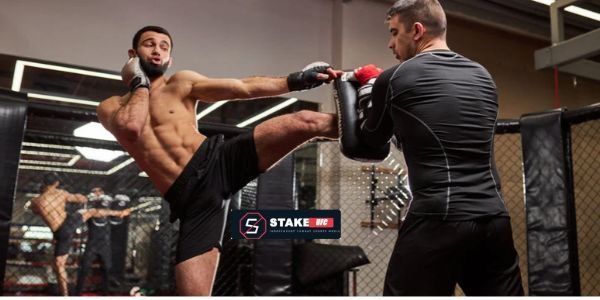
MMA, or mixed martial arts, combines several combat disciplines rather than relying on just one style. A serious MMA training programme normally includes boxing, kickboxing or Muay Thai, wrestling, Brazilian jiu-jitsu, grappling, strength and conditioning and MMA-specific sparring.
For a beginner, training usually starts with fundamentals before moving into harder sparring and competition preparation.
India’s MMA ecosystem is developing, and there are now gyms offering multiple disciplines under one roof. MMA Federation of India-affiliated gyms, for example, list combinations including MMA, boxing, kickboxing, Muay Thai, BJJ, wrestling and functional training.
How to Start MMA Training in India?
You do not need to be a professional athlete to start MMA.
A beginner can start by joining a reputable MMA or combat-sports academy and learning the basics of striking and grappling. You should focus on:
- Boxing fundamentals
- Kickboxing or Muay Thai
- Wrestling and takedowns
- Brazilian jiu-jitsu
- Footwork and movement
- Strength and conditioning
- Controlled sparring
- Recovery and nutrition
The most important thing is consistency. Watching UFC fights or practising combinations occasionally is not the same as structured MMA training.
Interestingly, Indian UFC fighter Anshul Jubli has spoken about starting with limited facilities in Dehradun and using online tutorials when better MMA facilities were not available. He also acknowledged that online learning has limits and cannot take someone beyond a certain level without proper training.
Is MMA Training Good for Beginners?
Yes. MMA training can be adapted for beginners, provided the gym has qualified coaches and a sensible progression system.
You don’t have to start by fighting someone.
A good beginner programme should initially concentrate on technique, conditioning, movement and controlled drills. Sparring intensity should increase gradually rather than putting a new student into hard fights immediately.
Some Indian combat-training facilities specifically offer programmes from beginner level through competitor preparation.
How Much Does MMA Training Cost in India?
The MMA training cost in India varies considerably depending on the city, academy, coach and number of sessions.
As one current example, FOMO Training in Bengaluru lists combat training from ₹3,000 per month for three coached sessions per week, although MMA and boxing rates can differ.
Premium facilities can cost substantially more.
So instead of choosing a gym purely because it is cheap, check what you are actually getting: coaching quality, training partners, combat disciplines, sparring opportunities, competition experience and strength-and-conditioning support.
What Is the Reality of World-Class MMA Training in India?
This is where aspiring fighters need a reality check.
India has MMA talent, but the country’s MMA infrastructure is still developing compared with established international combat-sports hubs.
That does not mean Indian fighters cannot become elite.
It means that someone targeting the highest levels of international MMA may eventually need exposure to stronger international training environments, specialised coaches and deeper pools of high-level training partners.
Look at the journey of Indian fighters.
Puja Tomar trained in Bali during her UFC journey, while Anshul Jubli has discussed travelling internationally for fight camps. UFC’s coverage of Tomar’s career also documents her training camp in Bali before her historic UFC debut.
International MMA camps can provide something that is difficult to reproduce everywhere: a constant pool of experienced fighters from different styles and countries.
For example, established Bali facilities offer MMA alongside Muay Thai, BJJ, boxing, strength and conditioning and recovery under one training ecosystem.
The realistic route for a serious Indian prospect may therefore be India for development + international camps for higher-level exposure.
That is very different from saying India has no good MMA training. The domestic scene is growing rapidly, with organisations and gyms investing in better facilities and coaching.
Can You Become a UFC Fighter From India?
Yes, but getting there requires much more than joining an MMA gym.
Indian fighters have already reached the UFC.
Anshul Jubli became the second India-born fighter to compete in the UFC after winning the inaugural Road to UFC lightweight tournament.
Puja Tomar became the first Indian woman to compete in the UFC, and in 2026 she remains India’s female representative in the promotion.
Bharat Khandare became the first native of India to compete in the UFC in 2017.
And Arjan Singh Bhullar, who represents Indian heritage while fighting out of Canada, became an important early UFC figure for Indian MMA fans.
These names are important because they show that the pathway exists. But they also show how demanding it is.
MMA Training vs UFC-Level Training
There is a major difference between the two.
| Regular MMA Training | Professional Fight Training |
|---|---|
| Fitness and technique | Fight-specific preparation |
| Beginner drills | Advanced tactical work |
| Occasional sparring | Structured fight camp |
| General conditioning | Sport-specific conditioning |
| Local training partners | High-level international partners |
| Basic nutrition | Detailed fight nutrition |
| Recreational competition | Professional competition |
Someone training MMA for fitness does not necessarily need international camps.
Someone trying to compete against the world’s best eventually needs a much more specialised environment.
Frequently Asked Questions About MMA Training in India
Is MMA training difficult?
Yes. MMA combines multiple combat disciplines, so beginners have to learn striking, grappling, takedowns, defence and conditioning. Progress takes time and consistent practice.
Is MMA better than boxing?
They are different sports. Boxing focuses primarily on punches, movement and boxing defence, while MMA combines striking with wrestling, grappling and submissions.
Can I start MMA at 18?
Yes. Competition rules vary, but FMMAI regulations classify athletes aged 18 and above as seniors.
Can I learn MMA without any fighting experience?
Yes. Beginner MMA programmes exist, and you can learn the fundamentals before progressing to sparring and competition.
How many days a week should I train MMA?
For a beginner, three structured sessions per week can be a practical starting point. More advanced athletes usually follow significantly more demanding schedules based on their goals and recovery.
Which city is best for MMA training in India?
There is no single answer. Mumbai, Bengaluru, Delhi-NCR and other major cities have growing combat-sports communities and specialist academies. The quality of the coach, training partners and overall programme matters more than the city name alone.
Can I become a professional MMA fighter in India?
Yes. India has produced fighters who have competed at major international levels, including UFC athletes such as Anshul Jubli, Puja Tomar and Bharat Khandare.
Do I need to go abroad for MMA training?
Not necessarily at the beginning. India can provide the foundation. However, serious prospects may benefit from international fight camps and training environments as they move toward higher levels of competition.
The Bottom Line
MMA training in India is growing, but becoming world-class requires more than having an MMA gym nearby.
India now has more facilities, coaches, promotions and fighters than it did when MMA was relatively unknown. The emergence of fighters such as Anshul Jubli, Puja Tomar, Bharat Khandare and Arjan Singh Bhullar has also given Indian fans real examples of fighters reaching international MMA.
But if your ambition is the UFC, don’t confuse learning MMA with training like a UFC-level professional.
Start in India. Build your striking and grappling foundation. Compete. Learn from experienced coaches. Develop your conditioning. Then, when your level demands it, consider international fight camps and stronger global training environments.
That is the less glamorous answer—but probably the more realistic one.




[…] you are looking for the latest MMA news and current UFC updates, UFC 332 is one of the biggest stories in combat sports right […]