Mike Tyson Biography: Boxing Record, Net Worth, Career & Legacy
Mike Tyson Biography: Boxing Record, Net Worth, Career & Legacy
Mike Tyson remains one of the most recognizable names in boxing history.
Long after his championship reign ended, the name Mike Tyson still carries a unique weight. He became the youngest heavyweight champion in boxing history at just 20 years old, unified the WBC, WBA and IBF heavyweight titles, and built a reputation around explosive power, terrifying speed and a style designed to overwhelm opponents before they could settle into a fight.
But Tyson’s story was never only about what happened inside the ring.
His career included extraordinary triumphs, a shocking defeat to Buster Douglas, a prison sentence following his 1992 rape conviction, the infamous Evander Holyfield ear-biting incident, financial problems after accumulating enormous wealth, and eventually a very public reinvention.
In November 2024, the 58-year-old Tyson returned to a sanctioned professional boxing ring for the first time since 2005 and lost an eight-round unanimous decision to Jake Paul.
Now 60, Mike Tyson remains active away from professional boxing and continues to work across entertainment and business. His name remains one of the most powerful brands in combat sports.
His legacy is complicated, enormous and impossible to ignore.
Quick Fighter Facts
| Category | Mike Tyson |
|---|---|
| Full Name | Michael Gerard Tyson |
| Nickname | Iron Mike |
| Other Famous Nickname | The Baddest Man on the Planet |
| Date of Birth | June 30, 1966 |
| Age | 60 |
| Birthplace | Brooklyn, New York, USA |
| Nationality | American |
| Height | 5 ft 10 in |
| Reach | 71 in |
| Weight Class | Heavyweight |
| Stance | Orthodox |
| Fighting Style | Peek-a-boo boxing, pressure fighting and explosive counterpunching |
| Professional Record | 50-7-2, 44 KOs |
| Professional No Contests | 1 |
| Championship | Undisputed Heavyweight Champion |
| WBC Championship | 2 |
| WBA Championship | 2 |
| IBF Championship | 1 |
| Professional Debut | March 6, 1985 vs. Hector Mercedes |
| Last Professional Fight | November 15, 2024 vs. Jake Paul |
Early Life and Background
The story of Mike Tyson began in one of Brooklyn’s toughest neighborhoods.
Michael Gerard Tyson was born on June 30, 1966, in Brooklyn, New York. His childhood was marked by financial hardship, instability and repeated encounters with the law.
As a child, Tyson was frequently bullied.
He was small, shy and had a high-pitched voice, which made him an easy target. Fighting became a way of defending himself, but it also became the path that eventually transformed his life.
At 12, Tyson was sent to the Tryon School for Boys after an arrest for purse snatching.
That might have been where his story became another cautionary tale.
Instead, it was where boxing discovered him.
At Tryon, Tyson met Bobby Stewart, a counselor and former amateur boxer. Stewart recognized the teenager’s unusual physical ability and introduced him to the man who would change his life: legendary trainer Cus D’Amato.
Cus D’Amato and the Making of Mike Tyson
Cus D’Amato saw something in Tyson almost immediately.
D’Amato had previously helped guide fighters such as Floyd Patterson and José Torres, and he understood that Tyson needed much more than punching instruction.
He needed structure.
D’Amato became Tyson’s trainer, mentor and eventually legal guardian. Tyson moved into D’Amato’s home in Catskill, New York, where the teenager lived in an environment completely centered around boxing and discipline.
This relationship became the foundation of the Mike Tyson fighting style.
D’Amato taught Tyson the psychological side of boxing as aggressively as the physical side.
Fear was not something to avoid.
It was something to control.
Tyson was trained in the peek-a-boo style, a system involving a compact defensive guard, head movement, explosive footwork and sudden attacks from close range.
The result was a heavyweight who did not fight like a conventional heavyweight.
He moved like a much smaller fighter.
He slipped punches.
He changed levels.
He exploded forward.
And when he found an opening, he could end a fight almost instantly.
D’Amato died in 1985, only months after Tyson turned professional.
The loss was devastating.
Kevin Rooney subsequently took over Tyson’s training and helped preserve much of D’Amato’s system during Tyson’s rapid rise.
Amateur Boxing Career
Before becoming a professional superstar, Mike Tyson developed a remarkable amateur résumé.
He won gold medals at the Junior Olympic Games in 1981 and 1982.
Tyson also competed for a place on the U.S. Olympic team for the 1984 Los Angeles Games. He lost during the trials and failed to make the Olympic squad.
It did not stop his rise.
Instead, D’Amato decided Tyson was ready for the professional ranks.
The teenager was only 18.
His professional career would begin less than a year later.
Mike Tyson’s Professional Debut
Mike Tyson made his professional boxing debut on March 6, 1985, against Hector Mercedes in Albany, New York.
He won by first-round knockout.
That became the beginning of something extraordinary.
Tyson ended 1985 with a perfect 15-0 record, with all 15 victories coming by knockout.
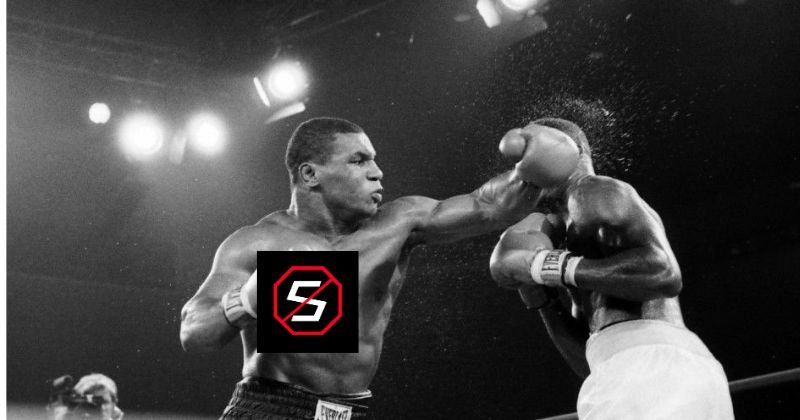
His combination of speed, power and defensive movement made his fights feel less like traditional heavyweight contests and more like controlled explosions.
He continued destroying opponents throughout 1986.
By the time he received his first world-title opportunity, Tyson had already established himself as the most frightening young heavyweight in the sport.
Mike Tyson Becomes the Youngest Heavyweight Champion
On November 22, 1986, Mike Tyson faced Trevor Berbick for the WBC heavyweight championship.
He was only 20 years old.
Tyson finished Berbick in the second round.
The victory made him the youngest heavyweight champion in boxing history, a record that remains one of the most famous achievements in the sport.
The most astonishing part was that Tyson was not finished.
He was only beginning.
Becoming Undisputed Heavyweight Champion
Tyson captured the WBA championship from James “Bonecrusher” Smith in March 1987.
Then, on August 1, 1987, he defeated Tony Tucker by unanimous decision to win the IBF title.
With that victory, Mike Tyson became the undisputed heavyweight champion, holding the WBC, WBA and IBF championships simultaneously.
He had become the undisputed heavyweight champion.
And he was still only 21.
That combination of youth, physical ability and championship success made Tyson an almost unprecedented sporting phenomenon.
He wasn’t simply winning.
He was making heavyweight boxing look frighteningly easy.
The Michael Spinks Fight
The defining performance of Tyson’s first championship run came against Michael Spinks.
Spinks entered the bout undefeated and had previously been the undisputed light-heavyweight champion.
Tyson needed only 91 seconds.
The fight ended with a first-round knockout.
The Spinks victory became the perfect representation of the Tyson phenomenon.
His opponents knew what was coming.
They simply could not always stop it.
The Mike Tyson Fighting Style
The Mike Tyson fighting style was built around controlled aggression.
Unlike many heavyweight punchers, Tyson did not rely solely on standing at long range and looking for a single knockout shot.
He moved into range.
He slipped punches.
He attacked the body.
He exploded with combinations.
Then he finished with hooks and uppercuts.
Peek-a-Boo Defense
The peek-a-boo system taught by Cus D’Amato placed enormous importance on keeping the hands high, moving the head and creating attacking angles.
Tyson’s head movement made him unusually difficult to hit cleanly at his peak.
Footwork
His compact movement allowed him to close distance extremely quickly.
Tyson could step inside a taller opponent’s jab and immediately transition into offense.
Left Hook and Right Hand
The left hook became one of his signature weapons.
Tyson often used body shots and straight punches to bring an opponent’s guard down before attacking with a hook.
Uppercut
His uppercut was particularly devastating against taller heavyweights.
Because Tyson could get underneath an opponent’s punches, he was able to generate enormous power at close range.
Power
Power was obviously the foundation.
But Tyson’s greatest advantage was not simply how hard he punched.
It was how quickly he could generate that power.
That speed made his punches difficult to anticipate.
The Buster Douglas Upset
For years, the idea that Mike Tyson could be beaten seemed almost ridiculous.
Then came February 11, 1990.
Tyson faced James “Buster” Douglas in Tokyo.
Douglas was a huge underdog.
Tyson knocked him down in the eighth round and appeared to be on his way to another victory.
Instead, Douglas recovered.
In the 10th round, he knocked Tyson out.
The upset became one of the greatest shocks in boxing history.
Tyson lost the heavyweight championship for the first time.
More importantly, the aura of invincibility disappeared.
The defeat remains the most significant turning point in Mike Tyson’s boxing career.
Personal and Legal Troubles
The years after the Douglas defeat became increasingly complicated.
Tyson was no longer the carefully controlled fighter who had operated under D’Amato’s guidance.
His personal life became increasingly chaotic.
He divorced Robin Givens, faced management problems and endured constant media attention. His behavior outside the ring frequently became as controversial as his performances inside it.
In 1992, Tyson was convicted of rape and sentenced to prison.
He served less than three years before being released in 1995.
His time away from boxing dramatically altered his career trajectory.
Tyson returned to the ring in 1995 and immediately became one of the biggest attractions in boxing again.
The Comeback and Second Championship
After his release from prison, Mike Tyson returned to boxing.
He defeated Peter McNeeley in August 1995 and won the WBC heavyweight title from Frank Bruno in March 1996.
For a moment, it appeared that the old Tyson was back.
But the comeback did not restore the complete dominance of his earlier reign.
Tyson lost to Evander Holyfield in November 1996, giving Holyfield the WBA heavyweight championship.
The two would meet again in one of the most infamous fights in boxing history.
Mike Tyson vs. Evander Holyfield
The rematch took place on June 28, 1997.
Tyson began the bout aggressively, but Holyfield repeatedly frustrated him with his physical style and close-range tactics.
In the third round, Tyson bit Holyfield’s ear.
The incident became one of the most recognizable moments in sports history.
The referee disqualified Tyson.
His boxing license was suspended, and he faced a major fine.
The episode damaged Tyson’s reputation but also became permanently attached to his public identity.
It remains one of the most discussed moments in Mike Tyson’s career.
Later Career and the Lennox Lewis Fight
Tyson eventually returned from suspension and continued fighting into the early 2000s.
The biggest remaining challenge of his career came against Lennox Lewis in 2002.
By then, Tyson was well past his prime.
Lewis defeated him by eighth-round knockout.
It was another important moment because it demonstrated just how far Tyson had fallen from the terrifying champion of the late 1980s.
But even then, his name remained enormous.
Mike Tyson’s Retirement
On June 5, 2005, Tyson faced Kevin McBride.
He lost by sixth-round TKO.
After the defeat, Tyson announced his retirement.
It was not a glamorous ending.
There was no championship belt.
There was no triumphant farewell.
There was simply a legendary fighter who knew he no longer wanted to continue competing at the highest level.
Mike Tyson’s Return Against Jake Paul
Nearly 20 years after his professional retirement, Mike Tyson returned to the ring against Jake Paul on November 15, 2024.
The fight was sanctioned as a professional eight-round heavyweight bout at AT&T Stadium in Arlington, Texas.
Tyson was 58.
Paul was 27.
The age gap was impossible to ignore.
Tyson showed flashes of his old explosiveness early, but Paul’s greater activity and movement eventually took control of the fight.
Paul won by unanimous decision.
The judges scored the contest 80-72, 79-73 and 79-73.
The defeat officially added another loss to Mike Tyson’s professional record.
But commercially, the event was enormous.
Tyson’s return demonstrated that his popularity had survived nearly two decades outside professional boxing.
Mike Tyson’s Professional Boxing Record
The current Mike Tyson record stands at:
50 wins, 7 losses, 2 draws and 1 no contest, with 44 wins by knockout.
| Result Type | Total |
|---|---|
| Wins | 50 |
| Losses | 7 |
| Draws | 2 |
| No Contests | 1 |
| KO/TKO Wins | 44 |
| Decision Wins | 6 |
Selected Mike Tyson Fight History
| Date | Opponent | Result | Method |
|---|---|---|---|
| Mar. 6, 1985 | Hector Mercedes | Win | KO, R1 |
| Nov. 22, 1986 | Trevor Berbick | Win | TKO, R2 |
| Mar. 7, 1987 | James Smith | Win | Decision |
| Aug. 1, 1987 | Tony Tucker | Win | Decision |
| Oct. 16, 1987 | Tyrell Biggs | Win | TKO, R7 |
| Jan. 22, 1988 | Larry Holmes | Win | TKO, R4 |
| Jun. 27, 1988 | Michael Spinks | Win | KO, R1 |
| Feb. 11, 1990 | Buster Douglas | Loss | KO, R10 |
| Nov. 9, 1996 | Evander Holyfield | Loss | TKO, R11 |
| Jun. 28, 1997 | Evander Holyfield | Loss | DQ, R3 |
| Jun. 8, 2002 | Lennox Lewis | Loss | KO, R8 |
| Jun. 5, 2005 | Kevin McBride | Loss | TKO, R6 |
| Nov. 15, 2024 | Jake Paul | Loss | Decision, R8 |
Mike Tyson’s Championships and Major Achievements
The list of Mike Tyson achievements remains extraordinary.
He became the youngest heavyweight champion in boxing history at 20.
He unified the WBC, WBA and IBF championships.
He became the undisputed heavyweight champion during the three-belt era.
He won world championship bouts against numerous elite heavyweights.
He was named The Ring’s Fighter of the Year in 1986 and 1988.
He was inducted into the International Boxing Hall of Fame in 2020.
His major accomplishments include:
- Youngest heavyweight champion in boxing history
- Undisputed heavyweight champion
- WBC heavyweight champion
- WBA heavyweight champion
- IBF heavyweight champion
- Lineal heavyweight champion
- 44 professional knockout victories
- The Ring Fighter of the Year in 1986 and 1988
- International Boxing Hall of Fame member
- Multiple-time world heavyweight champion
Mike Tyson Net Worth, Salary and Earnings
Mike Tyson net worth is difficult to state with absolute certainty.
Public estimates vary substantially.
Some current estimates place Tyson’s net worth in the tens of millions of dollars, but no independently audited figure is publicly available.
The important point is that Tyson once accumulated vastly more wealth.
He earned hundreds of millions of dollars during his boxing career, but financial problems eventually culminated in a 2003 bankruptcy filing.
His later financial recovery has come through entertainment, public appearances, media projects, endorsements and business ventures.
His cannabis company, TYSON 2.0, has become a major part of his post-boxing business identity.
The safest description of Mike Tyson net worth is therefore:
Public estimates place Mike Tyson’s current net worth in the tens of millions of dollars, but the exact figure is not officially verified.
Mike Tyson’s Personal Life
Mike Tyson has been married three times.
His current wife is Lakiha “Kiki” Spicer, whom he married in 2009.
Tyson is also a father and has spoken publicly about how family has helped reshape his priorities later in life.
His relationship with his children has become an important part of the more reflective Tyson who emerged after retirement.
This version of Tyson is dramatically different from the young champion who once seemed to live entirely for boxing.
Mike Tyson Outside Boxing
One reason the Mike Tyson name has survived so strongly is that his career eventually expanded beyond boxing.
He has appeared in movies and television shows, including The Hangover.
He has also written books, performed a one-man stage show and become a major podcast and entertainment personality.
His podcast, Hotboxin’ with Mike Tyson, introduced another side of his personality to audiences who knew him primarily as a fighter.
He has also remained passionate about pigeons, a hobby that dates back to childhood.
That interest has followed him throughout his life and became one of the more humanizing parts of his public identity.
Mike Tyson and TYSON 2.0
A major modern business development associated with Mike Tyson is his involvement with TYSON 2.0.
The cannabis brand has expanded beyond its original market and has developed a broader commercial footprint.
This business activity has allowed Tyson to continue monetizing his global brand long after his prime boxing years.
That is an important part of Mike Tyson’s current career.
He is no longer making money primarily by fighting.
The Tyson brand itself has become the asset.
Mike Tyson’s Current Status in 2026
As of October 2026, Mike Tyson is 60 years old and remains retired from regular professional boxing.
His most recent sanctioned professional fight was his November 2024 unanimous-decision loss to Jake Paul.
There is no officially completed professional comeback fight currently established.
Tyson has nevertheless remained connected to boxing through exhibitions, media appearances, business and entertainment.
A proposed exhibition against Floyd Mayweather has been discussed, but it has faced delays and uncertainty.
For now, Tyson’s primary public role is that of a retired boxing legend, entrepreneur and global sports personality.
Mike Tyson’s Next Fight
There is no officially confirmed next professional boxing fight for Mike Tyson as of October 2026.
A potential Mike Tyson vs. Floyd Mayweather exhibition has been discussed, but it has been subject to delays and uncertainty.
An exhibition should also be distinguished from a sanctioned professional bout.
Therefore, the accurate answer to the search query Mike Tyson next fight is:
No finalized professional fight is currently confirmed. A proposed Floyd Mayweather exhibition remains uncertain.
Mike Tyson’s Greatest Fights
Mike Tyson vs. Trevor Berbick
The fight that changed heavyweight boxing.
Tyson became the youngest heavyweight champion in history by stopping Berbick in Round 2.
Mike Tyson vs. Larry Holmes
A victory over one of the greatest heavyweights of the previous generation.
Tyson stopped Holmes in the fourth round.
Mike Tyson vs. Michael Spinks
Arguably Tyson’s most iconic knockout.
He destroyed the previously unbeaten Spinks in just 91 seconds.
Mike Tyson vs. Frank Bruno II
Tyson reclaimed the WBC heavyweight title by stopping Bruno in the third round in 1996.
Mike Tyson vs. Evander Holyfield
The rivalry became one of the defining stories of Tyson’s later career.
Their two fights produced a championship defeat, the famous ear-biting incident and one of the biggest controversies in boxing history.
Mike Tyson vs. Lennox Lewis
A meeting of two heavyweight icons.
Lewis stopped Tyson in the eighth round in 2002.
Mike Tyson vs. Jake Paul
The fight that introduced Tyson to a new generation.
At 58, Tyson returned to professional boxing after almost 20 years away.
Paul won by unanimous decision, but the event became an enormous global spectacle.
Mike Tyson’s Legacy
The greatest argument for Mike Tyson’s legacy is not simply his record.
It is the intensity of his peak.
There have been heavyweight champions with better longevity.
There have been fighters with cleaner records.
There have been champions whose careers were less controversial.
But very few fighters have ever created the same combination of fear, excitement and anticipation that Tyson produced during the second half of the 1980s.
He was young.
He was fast.
He was brutally powerful.
And he seemed capable of ending every fight within seconds.
Tyson also became a cultural phenomenon.
His image moved beyond boxing into films, television, video games, fashion and mainstream entertainment.
His mistakes became famous.
His comeback became famous.
His downfall became famous.
And his reinvention became famous.
The result is one of the most complicated legacies in modern sports.
Inside the ring, Mike Tyson was once almost impossible to stop.
Outside it, his life became a story of tremendous highs, devastating lows and eventual reinvention.
That is why decades after his championship reign, people still search for Mike Tyson, watch his knockouts and debate where he belongs among the greatest heavyweight boxers of all time.
His career may have ended.
His cultural impact did not.
Frequently Asked Questions
How old is Mike Tyson?
Mike Tyson is 60 years old. He was born on June 30, 1966, in Brooklyn, New York.
What is Mike Tyson’s professional boxing record?
The current Mike Tyson record is 50-7-2, with 44 knockout victories and one no contest.
Is Mike Tyson still boxing?
Mike Tyson is retired from regular professional boxing. His most recent sanctioned professional bout was an eight-round unanimous-decision loss to Jake Paul in November 2024.
Who did Mike Tyson fight last?
Tyson’s most recent sanctioned professional opponent was Jake Paul, who defeated him by unanimous decision on November 15, 2024.
Who is Mike Tyson fighting next?
There is currently no finalized professional fight confirmed for Tyson. A potential Floyd Mayweather exhibition has been discussed but remains uncertain.
How many knockouts does Mike Tyson have?
Mike Tyson has 44 professional knockout victories.
Was Mike Tyson the youngest heavyweight champion?
Yes. Mike Tyson became the youngest heavyweight champion in boxing history when he defeated Trevor Berbick at age 20.
Was Mike Tyson an undisputed heavyweight champion?
Yes. Tyson became the undisputed heavyweight champion after unifying the WBC, WBA and IBF titles in 1987.
What is Mike Tyson’s fighting style?
The Mike Tyson fighting style was built around the peek-a-boo system, explosive footwork, head movement, pressure, body punches, hooks and devastating uppercuts.
What is Mike Tyson’s net worth?
Public estimates vary. Mike Tyson net worth estimates place his current wealth in the tens of millions of dollars, although no independently audited figure is publicly available.
Did Mike Tyson ever fight Muhammad Ali?
No. Mike Tyson and Muhammad Ali never fought professionally. Tyson was heavily inspired by Ali but never faced him.
Why did Mike Tyson go to prison?
Tyson was convicted of rape in 1992 and served less than three years in prison before returning to professional boxing.
Why did Mike Tyson bite Evander Holyfield?
During their 1997 rematch, Tyson bit Holyfield’s ear during the fight and was subsequently disqualified.